
EDM FAQ - frequently asked questions
Answers to frequently asked questions in the field of spark erosion (EDM)
Are you looking for quick answers to the most important questions about spark erosion (EDM)? Then you are in the right place. On this page you will find a list of the most frequent questions and answers sorted by category.
Table of contents
EDM basics & general information
How does spark erosion work?
Surrounded by an insulating dielectric fluid, the electrically charged wire electrode never touches the workpiece. Instead, high-energy, plasma-hot sparks over 10,000°C, vaporize the material in front of it, cutting precise shapes in conductive materials, regardless of hardness. The current is pulsed, with some generators switching on and off in units of nano-seconds with cutting speeds over 400 mm²/min. The wire electrodes used in the application are from bedra.
What is a trim cut in wire EDM and why is it used?
A trim cut is an additional machining pass performed after the main cut in wire EDM. Only a small amount of material is removed during a trim cut.
Trim cuts are primarily used to improve dimensional and geometrical accuracy and to achieve a finer surface finish. Each trim cut can further reduce deviations from the previous cut and improve the accuracy of the final contour.
The number of trim cuts required depends on the desired precision and surface quality as well as the workpiece material, workpiece height, EDM wire and machine technology used.
How do flushing conditions affect wire EDM?
Flushing has a significant influence on the stability of the wire EDM process. It helps remove eroded material and particles from the machining gap and maintain stable conditions for electrical discharges.
Poor flushing conditions can result in unstable discharges, reduced cutting performance, impaired surface quality and an increased risk of wire breakage.
Flushing conditions are influenced by factors such as workpiece geometry, workpiece height, nozzle position and the machine technology used. For applications with difficult flushing conditions, selecting a suitable EDM wire can also contribute to process stability.
Where is wire EDM used?
Spark erosion is the uncontested key technology in the production of sophisticated moulding and stamping tools for production of metal and plastic parts for all industries. Additionally, there is the direct machining of complex precision components. Geometric variety and accuracy are the decisive erosion advantage. Unconventional solutions are realised. Freeform surfaces with extreme tapers, small holes, near-sharp corners and fine finishes. Everyone profits from spark erosion: whether we look at our watch, use an electric shaver, board a car, train or airplane, make a phone call, play or sit on stacking chairs … bedra EDM wire always represents a link in the chain of process.
How do I select the right EDM wire for my application?
What are the advantages of coated EDM wire?
Compared with conventional plain brass wire, coated EDM wires can provide higher cutting performance, improved process stability and better surface quality. The coating influences the discharge behaviour during the EDM process and can help use the available energy more efficiently for material removal.
Depending on the wire type and application, coated EDM wires offer particular advantages for high workpieces, demanding flushing conditions, high precision and surface-finish requirements, and applications where machining time needs to be reduced.
The most suitable coated EDM wire depends on factors such as the EDM machine, workpiece material, workpiece height, required surface quality and machining target.
One example: Compared to conventional brass wire, the use of gapstar® ONE can increase the machining speed by up to 60 percent. If wire consumption and the machine hourly rate are taken into account, production costs are reduced by more than 37 percent.
What is the difference between brass and coated EDM wire?
Brass EDM wire consists of a homogeneous copper-zinc alloy, whereas coated EDM wire has an additional functional coating around the core material. This coating is designed to influence the electrical discharge and machining behaviour during wire EDM.
Brass wire is a proven solution for a wide range of standard EDM applications. Coated EDM wires can offer additional advantages when higher cutting performance, improved surface quality, greater precision or more demanding machining conditions are required.
The best choice depends on factors such as the EDM machine, workpiece material, workpiece height, required surface finish and the desired balance between performance and machining costs.
Will spark erosion damage my workpiece?
Spark erosion is a thermal material removal process in which very small amounts of material are locally melted and removed as a result of clocked spark discharges. In the early years of EDM, generator and control technologies were not mature. Often, a very pronounced edge zone with thermal damage such as cracks, microstructural transformations, and residual stresses could appear in the manufacturing process. The so-called "white edge layer", which is created by the very rapid resolidification of molten material, has gained special significance in spark erosion. Due to the extremely fine-grained or even amorphous structure, this zone appears white in micrographs. Many users still associate spark erosion with unavoidable severe damage to the component edge zone.
In modern wire EDM, however, the energy pulses are so short and so controlled that the heat can only penetrate the workpiece to a very small extent. In particular, the use of re-cutting with successively reduced discharge energy means that the thermal influence can now be limited to less than 1 µm. This is an order of magnitude in which the thermal influence of machining processes, such as grinding or hard milling, also lies. Modern wire EDM is safe, effective, and well suited to create custom, high-finish, specialty parts for use in a variety of medical, aerospace, and industrial applications.
Wire erosion can also lead to discoloration of the surface due to oxidation and deposition of residues. However, these can be easily removed with standard cleaning agents.
Which materials can be eroded?
Erodability requires a certain minimum electrical conductivity of the material. Metals and metallic alloys are therefore easily erodible. Common metals used in EDM are steels, aluminium alloys, titanium alloys, nickel alloys, copper and non-ferrous metals. Sintered materials consisting of hard phase(s) and binder phase(s) can also be eroded. Even if the hard phase is an electrical insulator, the electrical conductivity of the binder phase can make it possible to erode. Classical examples of sintered materials in spark erosion are hard metals and PCD (polycrystalline diamond) and increasingly also special ceramic materials. Graphites can also be processed by spark erosion. Problems can occur if workpieces are provided with a non-conductive coating or have strong oxide layers, or if the material has larger non-conductive phases or impurities, such as non-metallic inclusions. Mechanical properties such as strength and toughness, on the other hand, have no influence on the erodibility.
Which materials cannot be eroded?
Electrically non-conductive materials and semiconductors cannot be eroded. These include, for example:
- Wood
- Plastics
- Glass
- Ceramic materials
- Silicon
Can EDM wire be reused?
The wire cannot be reused immediately, as it wears out during the EDM process. However, it can be recycled. Our sustainability principle bedra360 is ideally suited for this purpose.
What is the maximum height of my workpiece?
The maximum height of the workpiece is generally determined by the size of the wire EDM system, i.e. by the maximum travel of the Z-axis. For standard machines, the maximum cutting height is usually at least 250 mm. Depending on the size, the cutting height can be up to 1000 mm. However, even greater heights could be achieved by special machine modifications. From heights of 100-150 mm, the use of a wire diameter of 0.30 mm or larger is advisable to ensure efficient machining.
Can bedra wire electrodes be used on all EDM machines? What do I have to consider?
Most bedra products can be used universally on all common wire EDM machines. However, there are wires which are specially developed for certain machine types of the manufacturers. Therefore these wires are not necessarily suitable for use on other machines. Our wire button will guide you to the best suited bedra wire electrode based on the machine type and other application criteria. Our EDM application team is at your disposal for further inquiries.
Which spool sizes are available for bedra EDM wire?
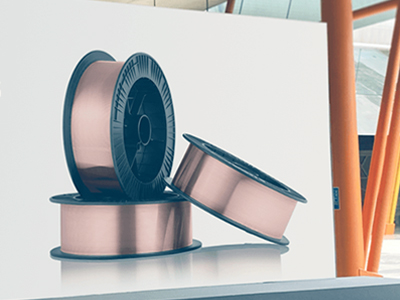
In our spool overview you will find all spools available for bedra products. Using the spool overview quick button, you can filter our product range by “EDM”. In addition to the spool images, you can also find the spool dimensions and the maximum filling weight per spool (in kg).
Furthermore, details of spool sizes available can be found under each respective EDM product under the “Delivery program” tab.
What makes the patented bedra spool so special?
The patented and innovative 12-cornered shape prevents it from rolling away. Thus, bedra erosion wires can be stored lying down properly while work safety is improved.
Where can I find the current metal prices?
In our metal price information system you can find daily updated metal prices. Displayed are overviews of currencies and the prices of raw metals. The metal prices are displayed either as a graph, a table or as a monthly average.
EDM wire selection & performance
Why do we recommend gapstar® ONE when using coated wire?
gapstar® ONE delivers unparalleled performance, up to 60% faster cutting than brass wire, while maintaining a competitive price. gapstar® ONE boosts cutting speed for both the main cut and the trimcuts, enabling this new wire to cover a broad range of applications from simple cuts to highly complex contours. Numerous lab tests and real world applications prove gapstar® ONE raises your throughput. Taking into account wire consumption and hourly machine rates, your production cost could be lowered up to 37%.
Another major advantage of gapstar® ONE is the compatibility across all EDM machine manufacturers and machine types with both a hard (gapstar® ONE.9) and two soft wire variants (gapstar® ONE.5 and gapstar® ONE.4). This means that no cumbersome adjustments are necessary in order to achieve the high cutting performance deliverd by gapstar® ONE.
For more information please visit the gapstar® ONE product pages.
What are the differences between gapstar® ONE and coated wire?
gapstar® ONE is a completely new generation of coated EDM wire that utilizes TRIMPAC® technology, something new to the world of EDM. TRIMPAC® means “Triple Impact Sheath” which describes a unique, patented technology that delivers up to 60% faster cutting performance as compared to brass wire. The difference between gapstar® ONE and other coated wires lies in the performance across all cuts with high precision and good surface quality. TRIMPAC® performance increases benefit both the main cut and trimcuts. High cutting precision is also achieved (Ra = 0.25). gapstar® ONE thus covers a very wide range of applications, i.e. from simple cuts to precision work with up to 4 trimcuts.
For more information please visit the gapstar® ONE product pages or check the next question (What advantages does gapstar® ONE offer compared to coated wire?).
What advantages does gapstar® ONE offer compared to coated wire?
gapstar® ONE cuts significantly faster than all wires of the previous generations and is the first product of our new TRIMPAC® wire generation. It offers plug and play compatibility on all machines, i.e. the wire works on machines with bare wire technologies as well as on machines with coated cutting technologies. gapstar® ONE operates with existing standard technologies of your machine. This means that no complicated adaptations are necessary in order to achieve high cutting performance.
gapstar® ONE is also characterized by good stability under poor flushing conditions, which can often occur in the manufacturing process. Additionally, gapstar® ONE achieves significant performance at a very attractive price-performance ratio. In numerous laboratory tests as well as practical applications, gapstar® ONE demonstrates increased throughput by up to 60% compared to brass wire. If the wire consumption and the machine hour rate are taken into account, costs are reduced by up to 37%.
gapstar® ONE is available in 3 different versions : Type ONE.9 is suitable for cylindrical and slightly conical cuts on all EDM machines. The types ONE.5 and ONE.4 have been specially developed for taper machining.
For more information please visit the gapstar® ONE product pages.
What does TRIMPAC® mean?
TRIMPAC® is bedra's latest patented coating technology. From the strengths of the wire generations cobracut®, broncocut® and topas® bedra developed the new coating technology TRIMPAC®. TRIMPAC® stands for "Triple Impact Sheath", which points out that the TRIMPAC® coating combines three effects:
1. The wire has a thin oxide layer that acts like a semiconductor and prevents faulty discharges, which improves the cutting quality.
2. The increased zinc content of the sheath increases abrasion, while at the same time improving wear resistance.
3. The surface has a special structure, which has a positive effect on the cutting performance and cutting quality.
As a result of the three effects, wires with TRIMPAC® coating technology achieve significantly higher cutting performance levels than the wires of the predecessors.
TRIMPAC® coating technology can be found in our new EDM high-performance wire generation gapstar® ONE.
What is the difference between gapstar® ONE.9, ONE.5 and ONE.4?
The three gapstar® ONE variants use the same TRIMPAC® coating technology but differ in tensile strength and elongation, making them suitable for different machining requirements.
gapstar® ONE.9 has a tensile strength of 900 MPa and an elongation of more than 1%. Its high stiffness and straightness make it particularly suitable for applications requiring reliable automatic threading, high cutting performance and precise machining.
gapstar® ONE.5 has a tensile strength of 500 MPa and an elongation of more than 10%. The softer wire is designed for taper cutting.
gapstar® ONE.4 is the extra-soft version with a tensile strength of 430 MPa and an elongation of more than 30%. It is particularly suitable for extreme taper cutting.
The appropriate version therefore depends mainly on the required wire flexibility, taper angle and machining task.
What is the difference between hard and soft EDM wire?
Hard and soft EDM wires mainly differ in their tensile strength and elongation. These mechanical properties influence how the wire behaves during threading and machining.
Hard EDM wires have a higher tensile strength and lower elongation. Their greater stiffness and straightness make them particularly suitable for precise machining and reliable automatic wire threading.
Soft EDM wires have a lower tensile strength and higher elongation. Their greater flexibility makes them particularly suitable for taper cutting, where the wire must follow larger angles through the wire guides.
The appropriate wire type depends on the EDM machine, taper angle, required precision and the specific machining task.
How does EDM wire diameter affect precision and cutting performance?
The diameter of the EDM wire influences factors such as possible geometries, internal radii, kerf width and process stability during wire EDM.
Smaller wire diameters enable very small radii and fine contours and are therefore used, for example, in micro EDM applications. At the same time, very small wire diameters place higher demands on wire guidance, threading and process stability.
Larger wire diameters provide greater mechanical stability and, depending on the machine, workpiece and technology, can offer advantages in machining performance.
The optimum wire diameter therefore depends on the required geometry, precision, workpiece height, material and the capabilities of the EDM machine.
Use our Wire Finder to identify a suitable EDM wire for your application
Which EDM wire is suitable for automatic wire threading?
For reliable automatic wire threading, EDM wire with high straightness and sufficient stiffness is particularly suitable. These properties help the wire pass through the machine guides and the start hole reliably, reducing the risk of threading interruptions.
Harder EDM wires with higher tensile strength are generally advantageous for automatic threading. gapstar® ONE.9, for example, combines a tensile strength of 900 MPa with high stiffness and excellent straightness, making it well suited for applications where reliable automatic threading is important.
The most suitable EDM wire always also depends on the machine type, wire diameter, start-hole geometry and specific machining conditions.
What is blac technology?
blac technology stands for “bedra lattice amplified coating” and is an advanced coating technology for EDM wire. It combines a microstructured surface with lattice-embedded semiconducting materials.
This structure allows each spark discharge to be coupled into the workpiece more efficiently, so that a larger share of the available energy can be used for material removal. As a result, blac technology can increase cutting performance while maintaining high process reliability.
The technology also contributes to improved energy efficiency, as less electrical energy is required per machined workpiece. The first EDM wires featuring blac technology are topas® blac G and blacspark® H.
Why do we recommend betterbrass when using brass wire?
We recommend our new and innovative betterbrass for standard applications, as it usually offers an increased performance in eroding, which is even more effective with increasing workpiece height.
Furthermore, betterbrass is characterized by the following features in addition to the very good price-performance ratio:
- Absolute process reliability 24/7
- Plug-and-Play function on all machine types
- Up-to-10% faster cutting speed
- High cleanliness
- Easy automatic threading
Faster eroding. Less wire consumption. Reduced wire costs
For more information please visit the betterbrass product page.
What are the differences between betterbrass and a standard brass wire?
The differences of betterbrass compared to a standard brass wire are in the specialized development of the alloy. The innovative heat treatment generates the increased performance speeds up to +10%.
For further information please visit the betterbrass product page or check the next question (What advantages does the betterbrass offer compared to a standard brass wire?).
What advantages does betterbrass offer compared to a standard brass wire?
The key to the realization of betterbrass was innovation in our core continuous casting and heat treatment technologies. Through this, our engineers have succeeded in generating a wire electrode from a new type of alloy and thus raising performance to a new level.
For betterbrass, alloy and casting technology are the basis for high process performance and stability already created during the original forming process. The specially developed heat treatment then completes the desired material structure.
The result is an increase in cutting performance of up to 10%. Thus, less wire is used and costs are reduced immediately. The improved results become even more apparent with lager workpiece heights. Reliability and precision meet the highest demands on bright brass wires.
betterbrass combines a lean manufacturing process with a performance characteristic that has never been achieved before:
- Absolute process reliability 24/7
- Plug-and-Play function on all machine types
- Up-to-10% faster cutting speed
Faster eroding. Less wire consumption. Reduced wire costs
For further information please visit the betterbrass product page.
What surface finish can be achieved with topas® plus G?
topas® plus G can be used to produce the highest surface qualities.
Which EDM wire is recommended for Japanese EDM machines?
In general, for Japanese machines such as Sodick, Fanuc or Mitsubishi, we recommend our betterbrass ONE.9 for the standard and our gapstar® ONE.9 with the new TRIMPAC® technology for high performance. For Makino, we recommend our topas® H.E.A.T. for high productivity in addition to betterbrass ONE.9 for the standard.
Which EDM wire is suitable for high precision and fine surface finishes?
For applications with very high requirements for precision and surface quality, topas® blac G is particularly suitable. The coated high-performance EDM wire featuring blac technology was specifically developed for high-precision machining.
With suitable machine technologies, surface finishes below Ra 0.10 µm can be achieved. At the same time, topas® blac G provides up to 15% higher cutting performance compared with conventional wires in this segment, such as A, G and AH wires.
The achievable surface quality always also depends on the EDM machine, technology settings, workpiece and machining strategy.
What causes poor surface finish in wire EDM?
Poor surface finish in wire EDM can have several causes. These include unsuitable machining parameters, insufficient flushing, an inappropriate main-cut and trim-cut strategy, and worn wire guides or power contacts.
The choice of EDM wire and the machine technology used also influence the achievable surface quality.
For applications with demanding surface requirements, the complete EDM process, the number and settings of trim cuts and the wire electrode should therefore be matched to each other. For applications requiring maximum precision and surface quality, bedra offers solutions such as topas® blac G.
Which EDM wire is suitable for series production?
Our new wire type gapstar® ONE.9 is particularly suitable for series production due to its uniquely high cutting performance.
How can the choice of EDM wire influence machining costs?
The choice of EDM wire can have a significant impact on total machining costs. The wire price itself is only one factor. Cutting speed, wire consumption, machining time, process reliability and the number of required cuts can have a much greater influence on the overall cost of a component.
A higher-performance EDM wire may therefore reduce total machining costs even if its purchase price is higher than that of a standard brass wire. Faster cutting can reduce machine hours, while stable machining conditions can help minimize interruptions and unnecessary wire consumption.
For an economic comparison, the complete EDM process should therefore be considered rather than the wire price alone. The bedra EDM cost comparison calculator can be used to compare different wire solutions and their impact on machining costs.
Which EDM wire is suitable for workpieces over 100 mm high?
For most machine types we recommend our new wire type gapstar® ONE.9, for a safe recommendation please use our wire button.
Which EDM wire is suitable for poor flushing conditions?
For most machine types we recommend our new wire type gapstar® ONE.9, for a safe recommendation please use our wire button.
What causes EDM wire breakage and how can it be prevented?
Wire breakage can occur when the EDM process becomes unstable or the wire is subjected to excessive thermal or mechanical stress. Possible influencing factors include insufficient flushing, unsuitable machine parameters, incorrect wire tension or wire speed, and contaminated or worn wire guides and power contacts.
Workpiece geometry, varying workpiece heights and the choice of EDM wire can also affect process stability.
To reduce wire breakage, machine parameters and flushing conditions should be adapted to the specific application, while wire guides, power contacts and the wire path should be checked regularly. The EDM wire should also be selected according to the machine, workpiece and machining requirements.
Find the right EDM wire for your application with our EDM wire finder
Materials & special applications
Can carbide also be machined with topas® plus G?
Yes, topas® plus G is also suitable for machining tungsten carbide.
Which EDM wire is recommended for taper cutting?
Wires with an elongation >10% are recommended for cutting cones >7°. Our gapstar® ONE.5 is very well suited for this purpose.
For cutting cones >30°, wires with an elongation of >30% are recommended. Our gapstar® ONE.4 is very well suited for this purpose. For more detailed information please use our wire button.
What is bedra's wire recommendation for machining carbide?
For the machining of carbides we recommend the wires cobracut® Type G and topas® plus G.
Which EDM wire is best suited for machining nickel and titanium alloys?
For most machine types we recommend our new wire type gapstar® ONE.9, for a safe recommendation please use our wire button.
Which EDM wire is best suited for machining aluminium?
For most machine types we recommend our new wire type gapstar® ONE.9, for a safe recommendation please use our wire button.
Which EDM wire is best suited for machining graphite?
For most machine types we recommend our new wire type gapstar® ONE.9, for a safe recommendation please use our wire button.
What is contamination-free wire EDM and when is it required?
Contamination-free wire EDM is used when residues from the wire electrode on the machined component surface need to be minimized. In conventional wire EDM, traces of copper and zinc from the electrode can remain on the workpiece surface.
This is particularly relevant for applications with high surface-purity requirements, for example in medical technology, aerospace and semiconductor manufacturing. In such cases, special EDM wires such as confreecut ONE can help significantly reduce copper and zinc contamination and minimize the need for subsequent cleaning processes.
Which EDM wire is suitable for contamination-free machining?
For applications where copper and zinc residues on the workpiece surface need to be minimized, confreecut ONE was specifically developed for contamination-free wire EDM.
Conventional wire EDM can leave traces of copper and zinc on the machined surface. This can be particularly relevant for demanding applications in industries such as medical technology, aerospace and semiconductor manufacturing.
confreecut ONE features a high-purity outer nickel coating. In bedra tests, copper and zinc contamination was reduced to nearly zero when machining with two to four trim cuts.
The required process parameters and number of trim cuts depend on the specific application, workpiece and EDM machine.
Which EDM wire is best suited for standard machining of polycrystalline diamond (PCD) and cubic boron nitride (CBN)?
This depends on the machine type and manufacturer. Our wire button will help you here.
Which EDM wire is best suited for micromachining with a diameter of 0.10 mm?
We recommend the microcut® CCA.
Which EDM wire is best suited for micromachining with a diameter of less than 0.10 mm?
This depends on the machine type, manufacturer and specific diameter. Our wire button will help you here
Service & complaints
How do I support the cause analysis at Berkenhoff in case of a complaint?
For a quick analysis of the causes and elimination of the error, it is crucial that we inspect the rejected goods. You can therefore support the complaint process by returning at least one wire coil that contains the fault as quickly as possible. An additional short description of the fault in picture or text form is also very helpful. Furthermore, you are welcome to contact our application team personally.
Wire handling & storage
My wire is stuck. What can I do to fix it?
If your wire is snagged, then do the following: Expose the snagged coils and cut the bundle of coils with scissors. Grasp all ends by hand and pull the wire layers over the coil flange.
How long is the warranty period for bedra EDM wires?
The warranty period for all our EDM wires is 12 months after date of manufacturing. (See question: What is the best way to store bedra spools? and What is the best way to store a used spool?) You can find more information on the EDM product page.
What is the best way to store bedra spools?
The spools are packed in shock, dust, and oxidation-proof material to protect the wire from shipping damage and contamination. The wire should be stored in the original packaging until ready for use. This will ensure the highest quality for your EDM applications. The storage of the EDM spools should also always be stored in a horizontal manner to prevent loosening / falling of individual turns of wire and thus disturbances during unwinding. Warranty will void in case of improper storage. You can find more information on the EDM product page.
What is the best way to store a used spool?
It is very important to properly secure the loose end of the wire on partially used spools. This will prevent the wire from shifting on the spool and becoming tangled. Improper handling and storage techniques can cause unwinding problems and unnecessary wire breakage. Partially used spools should be stored in their original packaging material when not in use. This will minimize contamination and shifting of the wire on the spool. You can find more information on the EDM product page.
Sustainability
What is bedra360?
bedra360 - the all-round sustainability principle enables the recovery of copper and brass wire and its return to a closed recycling loop. The return of used wire recyclables is carried out by our authorised dealer network directly at the end customer. The recyclable materials are collected in transport containers provided by bedra and then collected by us from the dealer. Afterwards, the recyclable materials are reprocessed (cleaning, melting down, casting) to produce new wire.
This offers the following advantages:
- Reduction of the metal price dependency
- Cost advantages due to metal quenching and tempering
- Image and sustainability gain without additional costs
bedra360 is currently only available in Europe.



Berkenhoff GmbH (headquarters)
- Kinzenbach plant
- Berkenhoffstraße 14
- 35452 Heuchelheim
- Germany
- +49 641 601 0
- +49 641 601 222
- info(at)bedra.com
Berkenhoff GmbH
- Merkenbach plant
- Rehmühle 1
- 35745 Herborn
- Germany
- +49 2772 5002 0
- +49 2772 5002 155
- info(at)bedra.com
bedra Vietnam Alloy Material Co., Ltd
- Lot CN-06, Hoa Phu Industrial Park,
Mai Dinh Commune,
Hiep Hoa District, Bắc Ninh Province,
Vietnam
- +84 2043900104
- +84 2043900110
- info-asia(at)bedra.com

 English
  Deutsch
  Tiếng Việt
  中文
中文