


A wire rod is a semi-finished rolled steel or non-ferrous product, typically supplied in coil form, and serves as the starting material for wire drawing and further processing. It is produced by hot rolling billets into long, continuous strands with a circular, oval, or polygonal cross-section, usually in diameters ranging from 5 mm to 14 mm, although special grades can exceed these dimensions.
Wire rod is a key intermediate product in the wire industry, used to manufacture a wide range of final products through cold forming, drawing, rolling, or heat treatment.
Key characteristics
- Hot-rolled – Delivered as-rolled or with controlled cooling for optimized microstructure
- Supplied in coils – Enables continuous, high-efficiency downstream processing
- Homogeneous cross-section – Round is most common, but other geometries are possible
- Customizable surface condition – Available as pickled, coated, or with mill scale
- Suitable for alloying – Produced from carbon steels, alloy steels, stainless steels, copper, aluminium, etc.
Common materials
- Carbon steels – For structural wires, welding wire, and fasteners
- Alloy steels – For springs, cold heading, or heat-treated components
- Stainless steels – For corrosion-resistant applications in food, medical, or chemical industries
- Non-ferrous metals – Copper, aluminium, and brass for electrical or decorative applications
Applications
Wire rod is used as a base material for:
- Wire drawing – Fine wire, medium wire, shaped wire
- Fastener production – Bolts, screws, rivets, nails
- Springs and suspension systems – Automotive and industrial springs
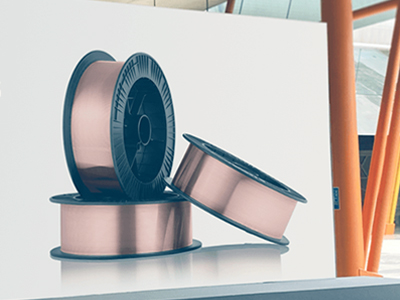
- Welding consumables – Electrodes, MIG/MAG wire
- Construction – Mesh, rebar wire, pre-stressed strands
- Electrical conductors – Cables, busbars, contact wires

 English
  Deutsch
  Tiếng Việt
  中文
中文