

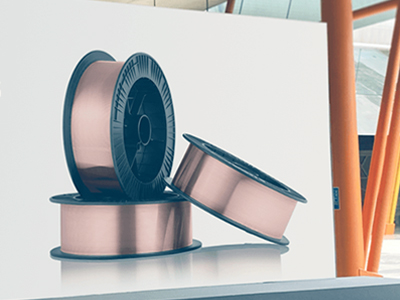
Unalloyed copper, commonly referred to as pure copper, is copper in its nearly purest form, typically with a copper content of ≥ 99.9%. It contains only minimal amounts of residual elements or impurities, without the addition of alloying constituents. Due to its exceptional electrical and thermal conductivity, it is one of the most important industrial metals—especially in electrical engineering and electronics.
Key properties
- Very high electrical conductivity – Perfect for power transmission, busbars, and windings
- Excellent thermal conductivity – Ideal for heat exchangers, cooling systems, and heat sinks
- Good corrosion resistance – Stable in air, water, and many chemical environments
- Outstanding formability – Suitable for drawing, bending, rolling, soldering, and brazing
- Antimicrobial surface – Useful in hygiene-sensitive applications
- Non-magnetic – Safe for use in sensitive electronic and magnetic environments
Common grades (EN / ASTM)
- Cu-ETP (CW004A) – Electrolytic tough pitch copper; standard for electrical applications
- Cu-OF / Cu-OFE (CW008A) – Oxygen-free copper; used in high-frequency and vacuum applications
- Cu-HCP (CW021A) – High-conductivity phosphorus-deoxidized copper with low hydrogen embrittlement risk
Typical applications
- Electrical engineering and power distribution – Wires, busbars, transformers, electric motors
- Electronics – Printed circuit boards (PCBs), connectors, microcontacts
- Cooling and HVAC systems – Heat exchangers, copper pipes, thermal conductors
- Mechanical engineering – Bearings, earthing components, sliding contacts
- High-frequency and vacuum technology – RF enclosures, waveguides, accelerator components

 English
  Deutsch
  Tiếng Việt
  中文
中文