


blac technology is a coating technology developed by bedra for wire electrodes used in electrical discharge machining. The term stands for bedra lattice amplified coating. The technology combines a microstructured surface with lattice-embedded semiconducting materials. As a result, each spark discharge is coupled into the workpiece more efficiently, allowing a larger share of the available energy to be converted into EDM material removal.
In wire EDM, the coating of the wire electrode has a significant influence on cutting performance, process reliability, surface quality and energy efficiency. With blac technology, bedra introduces a new generation of coating that enables higher productivity, efficiency and consistency in the EDM process – without the need to adapt existing cutting technologies.
A key advantage of blac technology is its higher cutting performance, both in the main cut and in the first three trim cuts. At the same time, the usual high level of process reliability is maintained. By making better use of spark discharges, the technology can also contribute to lower electricity consumption per manufactured workpiece and support industrial sustainability and CO2 reduction strategies.
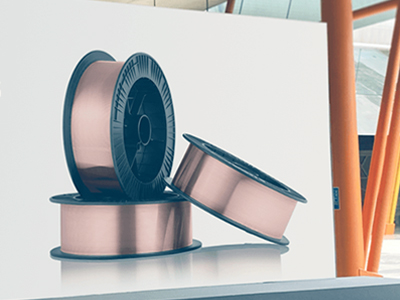
The first EDM wires with blac technology include topas® blac G and blacspark® H. topas® blac G was developed for high-precision applications and combines maximum precision with excellent surface quality. The wire electrode achieves up to 15% higher cutting speeds compared to conventional wires in this segment and enables surface qualities of up to Ra < 0.10 µm.
blacspark® H is the hard version of blac technology and was developed for maximum cutting performance in standard applications. The wire electrode combines a finely microstructured surface with uniformly embedded semiconductor particles and supports particularly efficient use of generator power.
For users, blac technology means higher productivity, stable machining processes, precise cutting results and more efficient use of available machine performance. The technology is especially relevant for manufacturing environments where speed, precision, process reliability and energy efficiency are equally important.
Glossary
blac technology
blac technology
Berkenhoff GmbH (headquarters)
- Kinzenbach plant
- Berkenhoffstraße 14
- 35452 Heuchelheim
- Germany
- +49 641 601 0
- +49 641 601 222
- info(at)bedra.com
Berkenhoff GmbH
- Merkenbach plant
- Rehmühle 1
- 35745 Herborn
- Germany
- +49 2772 5002 0
- +49 2772 5002 155
- info(at)bedra.com
bedra Vietnam Alloy Material Co., Ltd
- Lot CN-06, Hoa Phu Industrial Park,
Mai Dinh Commune,
Hiep Hoa District, Bắc Ninh Province,
Vietnam
- +84 2043900104
- +84 2043900110
- info-asia(at)bedra.com
Do you have a question about our products?
Use our wire configurator!

 English
  Deutsch
  Tiếng Việt
  中文
中文